
Brass machining — built-up edge, tool life, and the chip that welds
Brass is the easiest metal to cut and one of the easiest to get wrong, and the difference is in the chip. Free-machining brass — C36000, the leaded grade — chips cleanly because the lead acts as an internal lubricant, so the chip breaks and the surface finishes itself. But brass is also soft, and a dull or highly positive tool rubs rather than shears, and the rubbed material builds up on the cutting edge — the built-up edge — which then breaks off and tears the surface. The part looks like a finish problem; the cause is a tool geometry problem.
The tool choice is a sharp, neutral or slightly negative rake carbide with a polished top face, run at a high surface speed and a feed that keeps the chip meaningful. Too light a feed and the chip rubs and welds; too heavy and the thin chip tears the surface. Flood coolant helps on the harder brass grades — naval brass, bronze — but on C36000 air-blast alone is often enough, because the lead does the lubrication. Your lever is to specify the grade — C36000 for free machining, C46400 naval brass for corrosion, C95400 aluminium bronze for strength — because the grade changes the tool, the speed, and the cost.
Thread milling and tapping on brass are the operations where the built-up edge bites hardest. The tap or thread mill is a multi-tooth tool with a lot of edge contact, and brass likes to weld onto the flutes, which then jam and break the tap. The fix is a sharp, polished tap with the right flute geometry for brass — not a general-purpose tap — and a peck cycle that clears the chips. The facility behind this guide runs brass on 100+ CNC machines including Swiss-type turning at ±0.002 mm for fittings and 3/4/5-axis milling at ±0.003 mm for housings, with Hexagon CMM verification of threads and bores.
The cost driver on brass is not the cutting time — brass cuts fast — but the material price, which moves with the copper and zinc market. If you lock the material price at the quote stage, you avoid the drift; if you quote brass at today's price and order next quarter, you pay the difference. The inspection is on the Hexagon CMM with Ppk ≥ 1.67 initial on key characteristics and Cpk ≥ 1.33 in production, under ISO 9001:2015 and IATF 16949:2016 (design clause 8.3 excluded). Specify the grade, the thread standard, and the surface finish, and ask for the tooling plan in the quote. Contact Felipe Iglesias at [email protected] or +86 13126536955.
The shop behind this brass guide — grade, tooling, and chip control specified
Backing this guide is a 6,800 m² plant at No. 8, Shuibian Songyuan Road, Hengli Town, Dongguan, Guangdong, China 523470, running 100+ CNC machines — Mazak VARIAXIS I-600 and INTEGREX I-250H S, TSUGAMI B0206-III/B0205-III, STAR SR-32JII / SR-32J Type N, Citizen Cincom A20-3F7 — plus 3-, 4- and 5-axis milling and turning, 5+ wire EDM and a Hexagon CMM bench with 20+ gauges.
Milling holds ±0.003 mm, turning ±0.002 mm, and grinding or wire EDM ±0.002 mm, all checked on a Hexagon CMM with the 10:1 gauge rule applied to every feature. Capability: Ppk ≥ 1.67 initial and Cpk ≥ 1.33 in production on key characteristics. Certified to ISO 9001:2015 (116024/A/0001/UK/En), IATF 16949:2016 (131941/A/0001/SM/En, design clause 8.3 excluded, openly disclosed) and ISO 14001:2015 (116024/B/0001/UK/En), held by Dongguan Zhuohang Ltd, USCC 91441900MA4UWT6X39, established 2005. Customers across Austria, Belgium, the Czech Republic, Denmark, France, Germany, Greece, Hungary, Ireland, Italy, the Netherlands, Spain, Sweden and the United Kingdom in Europe; Brazil, Canada, Mexico and the United States in the Americas; China, Israel, Japan, Singapore and Sri Lanka in Asia; Australia and New Zealand in Oceania; and South Africa in Africa are supplied from China, worldwide. Contact Felipe Iglesias at [email protected] or +86 13126536955 to begin the quote, and ask for the certificate numbers, the machine list and a past CMM report together.
- ISO 9001:2015 / IATF 16949:2016 / ISO 14001:2015 — certificate numbers published and verifiable.
- Build-to-print manufacturing: the plant cuts to your design and reports against your drawing.
- Stainless Steel: The defining machining problem is work hardening combined with low thermal conductivity.
- Grades in regular use: 303 for free-machining work, 304 and 316L for corrosion resistance, 17-4 PH where strength is needed after ageing, 416 and 420 where hardness is required.
- Incoming stock is verified against the mill certificate before it is cut.
The cutting mechanism of stainless steel
The defining machining problem is work hardening combined with low thermal conductivity. Heat does not leave with the chip, so it stays in the cutting zone; the surface layer work-hardens, and the next pass cuts through hardened material, which accelerates tool wear. The practical response is to keep the tool cutting rather than rubbing. Maintain chip load, avoid dwelling, and do not take a finishing cut so light that it burnishes instead of shears.
Confirm the grade on the mill certificate by XRF before cutting. 304 and 316 look identical and behave differently in service.
Grade selection for stainless steel
Austenitic, martensitic, and precipitation-hardening stainless grades are the grades that come up in practice. 303 for free-machining work, 304 and 316L for corrosion resistance, 17-4 PH where strength is needed after ageing, 416 and 420 where hardness is required.
Your grade selection is usually settled by the service environment, corrosion, strength, or temperature. And only then by machinability. If you choose on machinability first, your part meets the drawing and fails in service.
Dimensional behaviour of stainless steel
Dimensional stability is good once the part has stopped moving, but thin walls distort from the residual stress released by removing stock. Stress-relieving between roughing and finishing is the standard response on a tight-tolerance thin-wall part.
The general rule for your part is that a tolerance is held by the process, not by the machine. Where a feature is tight, the finishing pass is separated from roughing, the part is allowed to stabilise, and the measurement is taken at a controlled temperature.
Finishing options for stainless steel
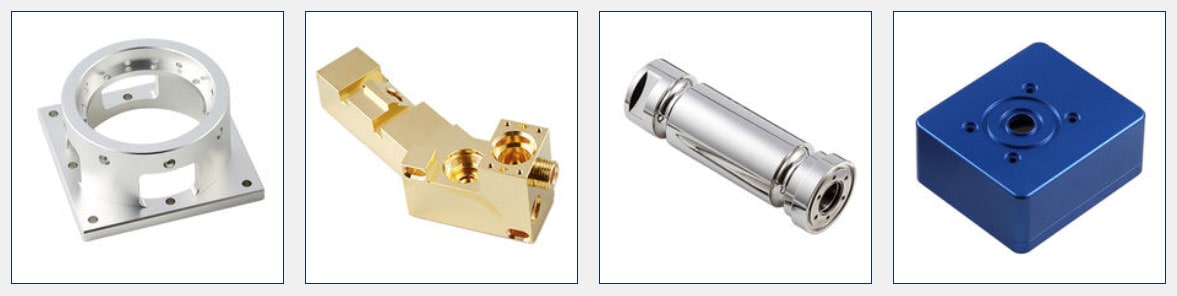
Passivation after machining restores the chromium oxide layer that free iron from cutting tools has contaminated.
You specify finishing on the drawing, not assume it at the end. Where a coating adds thickness, threaded and press-fit features need the allowance stated, because a coating applied after inspection changes the fit.
Tool consumption and cycle time on stainless steel
Heat does not leave with the chip, so it stays in the cutting zone; the surface layer work-hardens, and the next pass cuts through hardened material, which accelerates tool wear.
The lever that matters most for you is usually design rather than process: pocket depth, corner radius, and wall thickness change cycle time more than any tooling choice, because they determine the tool that can be used and therefore how much material can be removed per minute.
Three things that change the price without changing the part
The design levers on stainless are wall thickness and pocket depth. Thin walls distort as roughing releases residual stress, so a stress-relief operation and a separate finishing pass are usually cheaper than trying to hold a thin wall in one go. Avoiding a dwell — a tool rubbing rather than cutting. Matters more here than on any other common material.
This is worth raising at quote stage rather than after the first article, because the changes are usually trivial on the drawing and significant on the machine.
What the capability numbers actually mean
For capability reporting, key and special characteristics start at Ppk ≥ 1.67 and run at Cpk ≥ 1.33 in production; general characteristics start at Ppk ≥ 1.33. Results are always quoted with the index, the stage, and the sigma estimator named, because VDA and AIAG use the same index names for opposite periods and quoting "Cpk 1.67" without that context is meaningless.
Values between 1.33 and 1.67 are conditional acceptance requiring customer review, not a pass. Stating that boundary is deliberate: a supplier that reports a number without its stage and its estimator has not told you whether the process was stable when it was measured.
Which entity is responsible for the work?
Dongguan Zhuohang Ltd, Registration No. 91441900MA4UWT6X39, in operation since 2005.
How much capacity sits behind it?
a floor of 100-plus machines with depth in every relevant family — 50+ three-axis, 20+ four-axis, 20+ five-axis, 25+ turning centres, plus Swiss-type, grinding, and wire EDM.
What is certified, and what is deliberately not?
Three certificates, each with a number you can check with the registrar: ISO 9001:2015 (116024/A/0001/UK/En), IATF 16949:2016 (131941/A/0001/SM/En), and ISO 14001:2015 (116024/B/0001/UK/En).
The IATF 16949 certificate excludes clause 8.3 (product design). That is normal for a build-to-print manufacturer and it is stated here rather than left for an auditor to discover: the plant manufactures to your design, it does not originate the design.
What this shop actually runs
Capability evidence should come as specifics, not slogans. Behind this guide is a 6,800 m2 plant in Dongguan, China running 100+ CNC machines with 100+ staff. The machine list by category:
- 5-axis machining centres (10+) - Mazak VARIAXIS I-600 (510/910/510 mm travel, 12,000 rpm, 22 kW, 71.6 N·m, 30-tool BT40) and Mazak INTEGREX I-250H S (B-axis 0.0001°, 24 kW, 124 N·m, 38-tool HSK-A63). Made for compound-angle parts, single-setup multi-face prismatic work, and aerospace fittings where datum transfer loss is unacceptable.
- 3-axis / 4-axis machining centres (50+) - Brother SPEEDIO S500Z2N / S700Z2N (10,000 rpm, 14/21-tool ATC, 0.7 s tool-to-tool, Z-axis 2.2 G) and Mazak VCE-430A L / VCE-570C L (10,000 rpm, 118 N·m, 24-tool ATC). Made for prismatic parts, plates, brackets, housings.
- Swiss-type turning centres (10+) - Citizen Cincom A20-3F7 (Φ20 mm, 10,000 rpm), TSUGAMI B0206-III / B0205-III (Φ20 mm, 0.1 µm), STAR SR-32JII / SR-32J Type N (Φ32 mm, 8,000 rpm). Made for long, slender rotational parts at ±0.002 mm.
- CNC turning centres (20+) - HEADMAN T70M/1250 (720 mm swing, 117 mm bore, 3,000 rpm, BMT75 12-station turret). Made for shafts, bushings, flanges up to ±0.002 mm.
- Wire EDM (5+) - Sodick AQ535L (550/350/300 mm travel, ±20° taper, 800 kg workpiece). Made for hardened tool steel, internal splines, sharp internal corners that milling cannot reach.
- Inspection: Hexagon CMM + 20+ gauges - Hexagon CMM for coordinate measurement, plus vision system, profilometer, hardness tester, coating thickness gauge, XRF for material verification. The 10:1 rule (gauge 10x more accurate than the band) is applied to every feature.
- Machine highlights - VARIAXIS I-600: one-setup multi-face 5-axis + MAZA-CHECK auto-calibration; INTEGREX I-250H S: DONE-IN-ONE mill-turn, B-axis 0.0001° + Ai thermal shield; SPEEDIO S500Z2N / S700Z2N: Z-axis 2.2 G + 0.7 s ATC; Swiss-type: guide-bush switchable + 0.1 µm resolution.
Tolerance: ±0.003 mm CNC milling / ±0.002 mm CNC turning / ±0.002 mm grinding and wire EDM. Capability: Ppk >= 1.67 initial on key characteristics, Cpk >= 1.33 ongoing.
Certificates: ISO 9001:2015 (116024/A/0001/UK/En), IATF 16949:2016 (131941/A/0001/SM/En, with design clause 8.3 excluded, stated openly) and ISO 14001:2015 (116024/B/0001/UK/En), issued to Dongguan Zhuohang Ltd, registration 91441900MA4UWT6X39, founded 2005.
Where we ship: Austria, Belgium, the Czech Republic, Denmark, France, Germany, Greece, Hungary, Ireland, Italy, the Netherlands, Spain, Sweden and the United Kingdom in Europe; Brazil, Canada, Mexico and the United States in the Americas; China, Israel, Japan, Singapore and Sri Lanka in Asia; Australia and New Zealand in Oceania; and South Africa in Africa — plus other countries and regions worldwide, shipped from our base in Dongguan, China.
Contact: Felipe Iglesias, [email protected], +86 13126536955.
Get a quote with the cost drivers named
Send your drawing to [email protected] or call +86 13126536955. We will tell you which tolerance or setup is driving the number, not just the number.
Frequently Asked Questions
Are you a manufacturer or a trading company?
A manufacturer. The legal entity is Dongguan Zhuohang Ltd (Registration No. 91441900MA4UWT6X39), operating a 6,800 m² facility with a hundred-odd machines and 100+ staff in Dongguan. Factory visits are welcome.
Is your IATF 16949 certificate valid for design work?
No. The certificate excludes clause 8.3 (product design). The plant is certified to manufacture to your design and to run the associated process controls, not to originate product design.
Does stainless steel cost more to machine than aluminium?
Usually yes, and the reason differs by material: for titanium it is cutting speed and tool consumption, for stainless it is cycle time and work-hardening management. The lever that matters most is usually design depth rather than process choice.
What files do you need for a quote?
In short, A 3D model (STEP or IGES) with a 2D drawing carrying the tolerances, surface finish callouts, material spec and any inspection or certification requirements. The drawing defines the contract — the model alone usually leaves the tolerance scheme unspecified.
Can you work to ASME Y14.5 as well as ISO?
Yes. Both geometric dimensioning conventions are used. The important thing is that the drawing states which one applies, because the same symbol can mean different things under the two standards.
Do you hold stock or consignment for repeat orders?
Repeat orders can run against a forecast so stock and, where the part warrants it, dedicated fixturing are held ready. This is a commercial arrangement, not a standard term, so raise it at the second order rather than the first.
Do you certify stainless steel material?
Yes. Material certificates are supplied with the parts and incoming stock is checked against the mill certificate — composition by XRF, hardness where specified. Traceability is per heat or per batch as the certificate defines it.
Continue reading: 3 Axis China CNC Machining · 4 Axis China CNC Machining · 5 Axis China CNC Machining
Standards referenced on this page
- ASTM A276/A276M-17 — Standard Specification for Stainless Steel Bars and Shapes
- ASTM A484/A484M-24 — Standard Specification for General Requirements for Stainless Steel Bars, Billets, and Forgings
- ISO 9001 — Quality management systems — Requirements